India Today Conclave South 2026: Santosh Lad Demands Caste Census & Fair Representation for OBCs
By Neetha Bopaiah | Political Bureau, Bangalore Mail
KOCHI | September 29, 2026
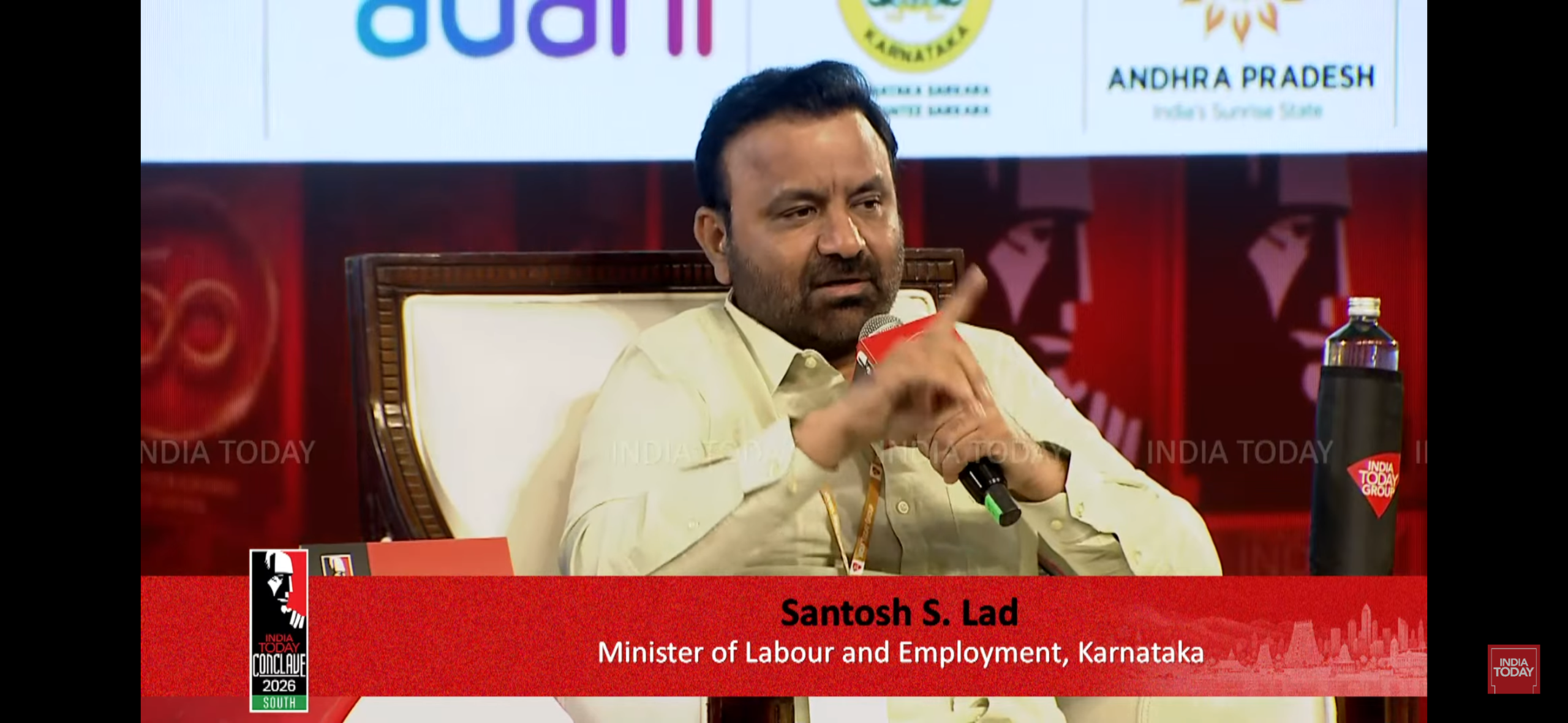
KOCHI — Highlighting the widening gap in economic growth and political representation for Backward Classes, Karnataka Minister Santosh Lad stated on Tuesday that Over 60% of Other Backward Classes (OBCs) in India remain unheard in State Assemblies and Parliament today.
Speaking at the India Today Conclave South 2026 in Kochi, the Minister made a strong case for a comprehensive caste census, emphasizing that reservation is not political appeasement, but an essential right for achieving economic equilibrium and social justice.
“A Bicycle vs. Ferrari Race”: The Wealth & Representation Gap
Drawing a stark analogy regarding economic inequality, Lad explained that expecting marginalized communities to compete without systemic support is inherently unfair.
“If someone is given a Ferrari and another person is given a bicycle and put in the same race, it’s unfair. A person born underprivileged cannot automatically be on par with the privileged in this society,” Lad said during his address.
He pointed out that despite constituting a major demographic share, OBCs have been unable to match the country’s broader economic growth. According to Lad:
Unorganized Sector: Out of the 93% of India’s population working in the unorganized sector, OBCs constitute nearly 80%.
Lack of Resources: A significant proportion of OBC individuals lack land ownership, entrepreneurial backing, and capital.
Money & Caste Dynamics: Marginalized candidates often struggle to compete against wealthier, higher-caste political opponents in legislative elections, directly impacting their legislative representation.
Call for Data-Driven Policy and Caste Census
Underlining the necessity of accurate demographic data to drive targeted affirmative action, Lad urged the center and states to conduct a systematic caste census to identify who genuinely qualifies for OBC benefits.
India is home to roughly 3,700 OBC communities nationwide, including 802 communities in Karnataka alone.
Lad added that major communities such as Lingayats and Vokkaligas could also be classified under the OBC category, provided their inclusion is backed by empirical data demonstrating educational, economic, and entrepreneurial backwardness.
“Reservation is not an appeasement; it is a right and an opportunity for social justice and economic equilibrium,” Lad concluded, stressing that providing fair opportunities in education and wealth creation is mandatory to ensure true democratic inclusion.