Karnataka SIR Update: Over 17 Lakh Forms Submitted Without 2002 Mapping Details
By Political Bureau
Bangalore Mail
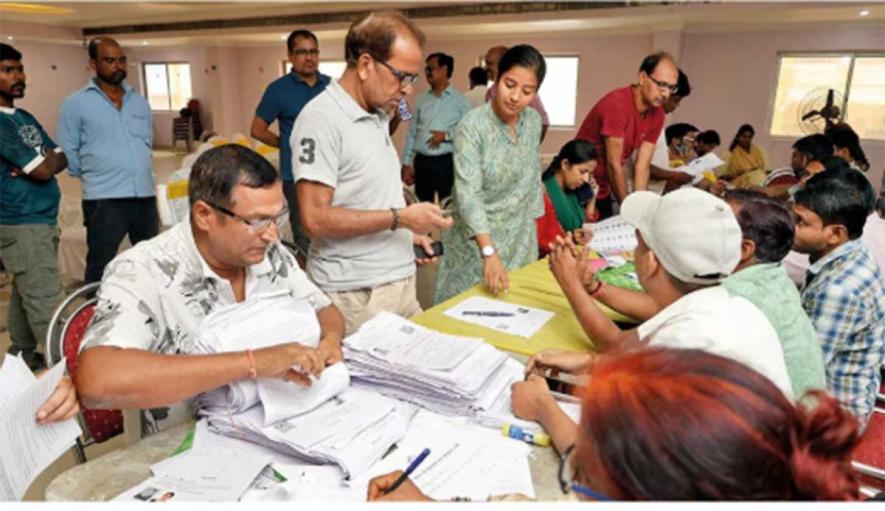
BENGALURU: As the ongoing Special Intensive Revision (SIR) of electoral rolls progresses across Karnataka, election authorities have recorded over 17 lakh voter enumeration forms submitted without link details or mapping to the 2002 SIR database.
The widespread omission of historic voter linkages has raised crucial questions regarding notice issuance, verification timelines, and draft roll inclusions set for mid-August.
Key Highlights of the SIR Enumeration Drive
Missing Database Mapping: Over 18 lakh electors across the state—accounting for roughly 3.26% of Karnataka’s total electorate—have submitted enumeration forms where their names or ancestral links could not be verified against the 2002 SIR master database.
Urban Concentration: Urban centers remain the primary driver of unmapped records. Greater Bengaluru jurisdictions (including BBMP Urban, North, Central, and South divisions) account for nearly two-thirds (67%) of all unmapped voters statewide.
Notice Issuance Ahead: Voters whose details remain untraceable in the baseline database will be provisionally placed in the draft electoral roll. However, Electoral Registration Officers (EROs) will subsequently issue formal notices requiring supplementary physical verification and supporting documentation.
Bengaluru Leads in Unmapped Voters
According to data shared by Chief Electoral Officer (CEO) V. Anbu Kumar, Bengaluru Urban recorded the highest individual concentration of unmapped voters, with over 4.74 lakh electors (11.81%) lacking baseline 2002 records. The North, Central, and South City Corporations cumulatively add over 7.3 lakh electors to this category.
Outside the capital city, Mysuru recorded the highest non-capital volume with over 94,000 unmapped electors (3.39%), followed by Belagavi, Ballari, Kalaburagi, Tumakuru, and Dakshina Kannada. Conversely, districts like Haveri and Bagalkote reported less than 0.7% unmapped electors.
Verification Process and Next Steps for Voters
To clarify widespread public concern, election officials reiterated key timelines and procedures for electors navigating the revision:
1. Draft Roll Publication: The draft electoral roll is scheduled for publication on August 17. Electors who completed and submitted their enumeration forms—online or via Booth Level Officers (BLOs)—will find their names included provisionally.
2. Official Notice Stage: Post-publication, EROs will issue notices to electors whose records contain missing 2002 mappings or “logical discrepancies” (e.g., mismatched family age gaps or gender inconsistencies).
3. Document Submission: Voters receiving notices will be required to furnish identity, age, or address proofs to their designated ERO or BLO to ensure seamless retention in the final publication of the electoral roll.
The State Cabinet and election observers continue to advocate for streamlined verification workflows to ensure genuine citizens are not inadvertently omitted during administrative scrutiny.