Setting Grievances Aside: How a Miffed Krishna Byre Gowda Is Revamping Bengaluru’s Urban Landscape
By Kushinara M D
Bengaluru’s political landscape is no stranger to turf wars over key portfolios, but few administrative battles have yielded as dramatic a transformation for the city as Minister Krishna Byre Gowda’s tenure handling its urban agenda. What began as a quiet protest behind closed doors ultimately spilled onto the streets, redefining bureaucratic accountability in the IT capital.
The High Command Showdown: A Minister Without Teeth?
When Krishna Byre Gowda was initially handed the responsibility for Bengaluru’s development, the portfolio arrived with a major caveat. It was stripped of its most vital components: oversight of the Bengaluru Development Authority (BDA) and the Bengaluru Metro Rail Corporation Limited (BMRCL). Effectively, he was a Bengaluru minister decoupled from the primary engines driving the city’s expansion.
Miffed by the strategic clipping of his wings, Gowda refused to settle for a ceremonial title. Recognizing that real structural change required real authority, he took his grievances straight to the party High Command.
Sources close to the leadership note that Gowda made a compelling case: managing the city’s chaotic growth without control over its major land and transit bodies was a recipe for gridlock. His political gamble paid off. Returning from high-stakes meetings with renewed leverage and a clear mandate, he put his initial unhappiness behind him and pivoted straight to combating civic apathy.
“Is It Rocket Science?” – The Uncompromising War on Potholes
Upon his return, a re-energized Gowda shifted into overdrive, launching a relentless campaign to give Bengaluru a long-overdue facelift—starting with the city’s most infamous plague: potholes.
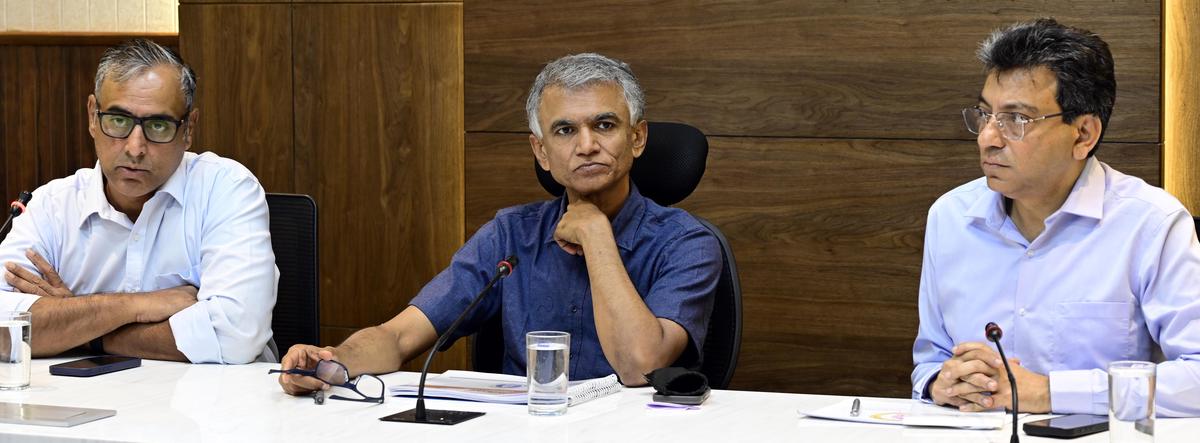
Frustrated by the endless stream of excuses from local bodies and engineers, Gowda summoned a high-level review meeting and set hard, uncompromising deadlines. It was during one of these heated sessions that he delivered the line that would echo across city circles for years:
“Is it rocket science that you people are not able to do it?”
The blunt, unfiltered critique struck a chord with millions of Bengaluru residents weary of administrative stalling. Gowda’s impatience wasn’t just performative; he backed up his rhetoric with surprise late-night inspections, holding zonal engineers directly accountable for every patch of broken asphalt. The message was clear: execute, or face consequences.
Reclaiming the Streets: The Aggressive Footpath Clearance Drive
Beyond the roads, Gowda turned his attention to a long-ignored crisis—the systematic erasure of pedestrian spaces. Decades of commercial encroachment, illegal parking, and poorly planned construction had forced pedestrians off footpaths and into dangerous oncoming traffic.
Gowda ordered an aggressive, uncompromising footpath clearance drive. Bruhat Bengaluru Mahanagara Palike (BBMP) task forces were deployed across major commercial hubs to demolish illegal shop extensions and clear out stubborn encroachments. While the move faced predictable pushback from local business lobbies, the broader public rallied behind the initiative. For the first time in years, everyday citizens felt that the city’s infrastructure was being reclaimed for the pedestrian.
An Unforgettable Legacy of Governance
Krishna Byre Gowda’s tenure serves as a compelling blueprint for urban governance. By refusing to accept a compromised portfolio and subsequently holding a mirror to bureaucratic inefficiency, he proved that political will remains the most crucial ingredient in urban reform.
Though political cycles come and go, his aggressive drive to reshape Bengaluru’s visual and functional landscape—and his refusal to tolerate mediocrity—has left an indelible mark on the minds of Bangaloreans. He demonstrated that fixing a city’s core issues isn’t rocket science; it simply requires leadership willing to ground the bureaucracy and champion the citizens.